












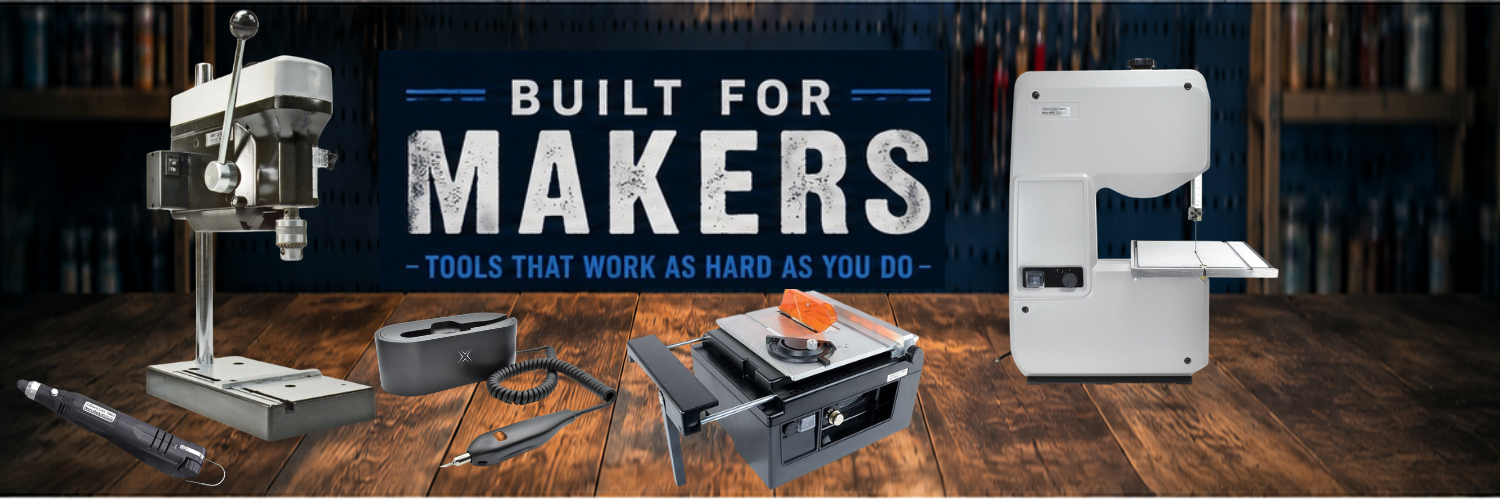
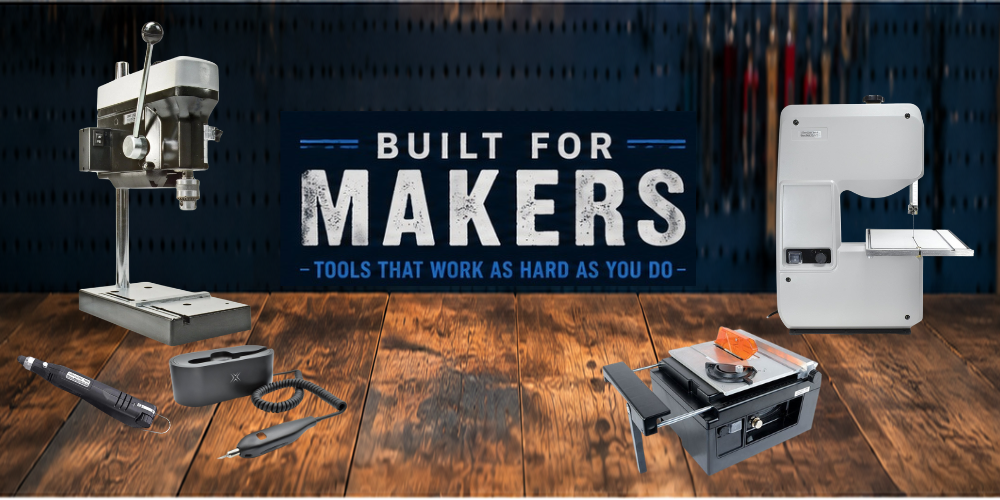








Product of the Week - Variable Speed Band Saw Cuts Intricate Shapes in Metal, Plastic, Wood, Stone, Tile, Glass and More!
Make designs you never dreamed possible. Cutting metal is so smooth and fast you'll complete your work in just 1/10th the time of other methods.


MicroLux™ Variable Speed Mini Band Saw
Couldn't load pickup availability
Shop Casting and Molding Supplies
Engaging in casting and molding as a hobby can be highly rewarding, allowing for creativity and the creation of unique items for many crafts.


Shop Micro-Mark Paints
All Paints are Made in the USA! Painting and finishing are key components to almost every project. With over 98 years of experience in the hobby/maker space, Micro-Mark has time-tested expertise in providing the best and most innovative paints, brushes, airbrushes, finishing supplies and painting equipment to our customers.


The Micro-Mark Paint Line
US Military Sets
Bring your military modeling to the next leveling with our US Military acrylic paints, covering from Revolutionary War to modern day.
Shop Deals
Discover closeouts, clearance specials, and unbeatable under-$10 finds.


Shop Unique Hobby Tools & Supplies Available Only at Micro-Mark
Discover precision tools and specialty supplies you won’t find anywhere else. Micro-Mark offers innovative solutions designed to help hobbyists of all levels achieve professional results.


Shop by Category
Explore our carefully curated categories to find the tools that bring your projects to life.


Micro-Mark has been serving makers, crafters and the DIY community
since 1928.
A third-generation family-owned business, our origin is traced to the Scientific Model Airplane Company of Newark, New Jersey. At the age of 16, our founder set up shop to manufacture and sell model airplane kits. The company continued to grow and evolve, and in 1983, the company started the Micro-Mark Tool and Distribution Center to satisfy an even more diverse group of makers.


